
Sustainable Sales Strategy: Linking Revenue Growth with Long-Term Business Responsibility
Sustainable Sales Strategy: Linking Revenue Growth with Long-Term Business Responsibility
In today's business environment, organizations are increasingly expected to achieve more than financial success. Customers, investors, employees, and regulators now expect businesses to demonstrate social responsibility, environmental stewardship, and ethical conduct alongside revenue generation.
This changing landscape has transformed the role of sales and business strategy. Traditional approaches that focused exclusively on short-term revenue targets are gradually giving way to more sustainable models that emphasize long-term value creation, customer trust, and responsible business practices.
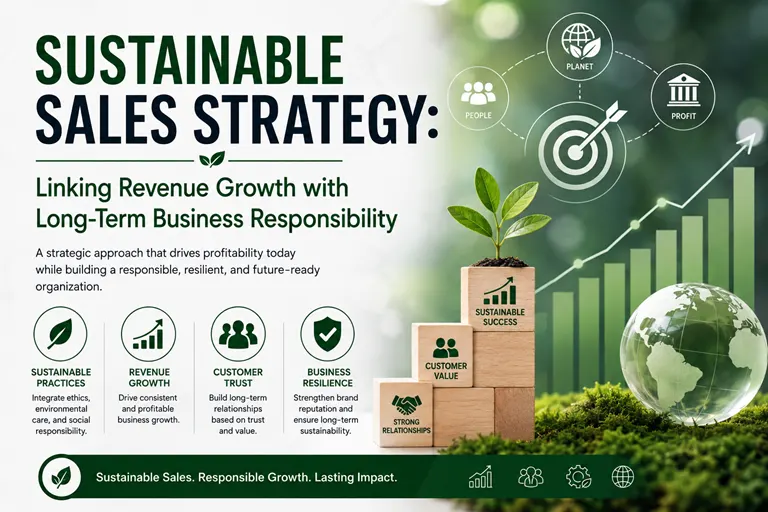
The concept of Sustainable Sales Strategy has emerged as an important area of study and practice within business and management disciplines. It represents the integration of sales growth objectives with environmental, social, and governance considerations, enabling organizations to pursue profitability while maintaining their commitment to broader societal responsibilities.
For scholars and practitioners, sustainable sales strategy presents a rich and rapidly expanding field of research with significant implications for organizational performance, customer relationships, and competitive advantage.
The Journal of Sales Science & Strategy (JSSS) recognizes the growing importance of sustainable business practices and encourages research that explores how organizations can successfully balance revenue growth with long-term business responsibility.
Understanding Sustainable Sales Strategy
Sustainable sales strategy refers to the development and implementation of sales practices that generate long-term revenue while simultaneously supporting ethical conduct, customer well-being, environmental sustainability, and organizational resilience.
Unlike traditional sales models that often prioritize short-term targets, sustainable sales strategies focus on:
- Long-term customer relationships
- Ethical selling practices
- Responsible resource utilization
- Stakeholder engagement
- Social and environmental accountability
- Sustainable organizational growth
A sustainable sales approach recognizes that long-term profitability depends on maintaining trust and creating value for all stakeholders.
Why Sustainability Matters in Modern Sales Management
Business environments have become increasingly complex due to:
- Growing environmental concerns
- Changing consumer preferences
- Increased regulatory expectations
- Rising investor focus on sustainability
- Greater demand for corporate transparency
- Digital transformation and global competition
Customers today increasingly prefer organizations that demonstrate responsible business behavior. Consequently, sustainability has become a strategic business imperative rather than merely a corporate social responsibility initiative.
Research suggests that organizations that successfully integrate sustainability into their business strategies often experience:
- Stronger customer loyalty
- Improved brand reputation
- Greater employee engagement
- Better risk management
- Increased innovation capability
- Long-term financial resilience
The Relationship Between Revenue Growth and Business Responsibility
For many years, there was a common perception that sustainability initiatives reduced profitability. However, contemporary research increasingly demonstrates that responsible business practices can support long-term financial performance.
Organizations that align their sales strategies with sustainability objectives often achieve:
Enhanced Customer Trust
Customers are more likely to remain loyal to businesses that operate ethically and transparently.
Improved Brand Reputation
Sustainable business practices strengthen organizational credibility and market positioning.
Competitive Differentiation
Companies that demonstrate environmental and social responsibility can distinguish themselves in competitive markets.
Long-Term Revenue Stability
Responsible customer relationships often produce recurring business and higher customer retention.
Innovation and Market Opportunities
Sustainability challenges frequently stimulate product and service innovation.
The Evolution of Sustainable Sales Practices
The concept of sustainability in sales has evolved significantly over the past decade.
Earlier approaches primarily focused on:
- Corporate philanthropy
- Environmental compliance
- Corporate social responsibility programs
Modern sustainable sales strategies encompass broader dimensions including:
- Responsible customer engagement
- Ethical leadership
- Sustainable supply chains
- Data privacy and customer trust
- Inclusive marketing practices
- Environmental stewardship
- Long-term stakeholder value creation
Ethical Selling as the Foundation of Sustainable Growth
Ethics remains a central component of sustainable sales strategy.
Organizations that prioritize ethical selling practices are more likely to establish durable customer relationships and maintain positive reputations.
Principles of Ethical Sales Management
Transparency
Providing honest and accurate information to customers.
Fairness
Avoiding misleading sales practices and unfair pricing strategies.
Accountability
Taking responsibility for organizational decisions and their impacts.
Customer-Centricity
Prioritizing customer value rather than short-term revenue maximization.
Integrity
Building trust through consistent and responsible business conduct.
These principles contribute significantly to long-term organizational success.
Customer Relationships and Sustainable Revenue Growth
Customer relationships are among the most valuable assets of any organization.
Sustainable sales strategies recognize that customer retention often generates greater long-term value than continuous customer acquisition.
Research opportunities in this area include:
- Customer trust and loyalty
- Relationship marketing effectiveness
- Sustainable customer engagement models
- Customer lifetime value
- Digital relationship management
- Ethical customer communication
Understanding these relationships can help organizations develop strategies that support both financial performance and long-term customer satisfaction.
Environmental Sustainability and Sales Strategy
Environmental sustainability is increasingly influencing customer purchasing decisions.
Organizations are responding through:
- Sustainable product development
- Green marketing initiatives
- Environmentally responsible supply chains
- Resource-efficient operations
- Circular economy practices
Research Opportunities
Business scholars may investigate:
- Consumer responses to sustainable products
- Green sales strategies
- Environmental branding
- Sustainability communication
- Sales performance and environmental initiatives
These areas offer considerable opportunities for future research.
ESG and Sales Performance
Environmental, Social, and Governance (ESG) frameworks have become important drivers of organizational strategy.
Increasingly, investors and stakeholders evaluate businesses based on ESG performance in addition to financial outcomes.
Potential research questions include:
- How do ESG initiatives influence customer behavior?
- Can sustainability improve sales performance?
- What is the relationship between ESG and brand value?
- How do sustainable business practices influence organizational growth?
The intersection of ESG and sales science remains relatively underexplored and presents significant opportunities for scholarly contributions.
Digital Transformation and Sustainable Sales
Digital technologies are changing the way organizations approach sustainability.
Modern technologies support:
- Data-driven decision-making
- Customer analytics
- Remote selling practices
- Resource efficiency
- Sustainable supply chain management
Artificial Intelligence and analytics can also help organizations identify opportunities for:
- Reducing operational waste
- Improving customer experiences
- Enhancing forecasting accuracy
- Supporting long-term relationship management
Research examining the relationship between digital transformation and sustainable sales strategies is likely to become increasingly important.
Leadership and Sustainable Sales Culture
Organizational leadership plays a critical role in embedding sustainability within sales functions.
Effective leaders create cultures that encourage:
- Ethical behavior
- Responsible decision-making
- Long-term thinking
- Stakeholder engagement
- Customer-centric strategies
Emerging Research Areas
Researchers may examine:
- Sustainable leadership styles
- Ethical decision-making in sales teams
- Leadership and organizational responsibility
- Sales culture and sustainability performance
- Employee engagement and responsible selling
Sustainable Sales Strategy and Organizational Resilience
Organizations that prioritize sustainability often demonstrate greater resilience during periods of uncertainty.
Responsible business practices can strengthen:
- Customer trust
- Employee commitment
- Brand reputation
- Stakeholder relationships
- Risk management capabilities
Recent global disruptions have highlighted the importance of organizational adaptability and long-term thinking.
Researchers increasingly recognize sustainability as a key driver of organizational resilience and long-term growth.
Research Directions for Scholars
Sustainable sales strategy is an emerging interdisciplinary field with numerous research opportunities.
Potential research topics include:
Sales Leadership and Sustainability
- Sustainable leadership behaviors
- Ethical sales management
- Responsible decision-making
Customer Relationships
- Customer trust and loyalty
- Sustainable relationship marketing
- Customer lifetime value models
Digital Sustainability
- AI-driven sustainability initiatives
- Data analytics and responsible selling
- Digital customer engagement
ESG and Organizational Performance
- ESG reporting and business performance
- Sustainability and competitive advantage
- Investor perceptions of responsible businesses
International Perspectives
- Sustainability across cultures
- Global responsible selling practices
- Cross-national comparative studies
Publication Opportunities in Sustainable Sales Research
As organizations increasingly integrate sustainability into their strategic objectives, demand for high-quality research in this area continues to grow.
The Journal of Sales Science & Strategy (JSSS) welcomes scholarly contributions related to:
- Sustainable sales management
- Ethical leadership
- Customer relationship management
- Business sustainability
- ESG and organizational performance
- Strategic management
- Responsible marketing
- Organizational growth and resilience
- Digital transformation and sustainability
Researchers are encouraged to submit empirical studies, conceptual papers, systematic reviews, and case studies that contribute to advancing knowledge in sustainable business and sales strategy.
Supporting New Journals in Business and Sustainability Research
The growing interest in sustainability and responsible business practices has led many institutions and scholarly organizations to launch new academic journals in business, management, and strategic studies.
For publishers planning to establish or modernize their journals, platforms such as ScholarJMS provide comprehensive solutions for journal websites, manuscript submission systems, editorial workflow management, and article publishing.
Similarly, services such as OJSCloud and GetDOI assist journals with website development, ISSN consulting, DOI workflows, and publishing readiness, enabling editorial teams to focus on producing high-quality scholarly content.
Frequently Asked Questions (FAQs)
What is a sustainable sales strategy?
A sustainable sales strategy is an approach that balances revenue generation with ethical conduct, customer value creation, and long-term social and environmental responsibility.
Can sustainability improve business performance?
Yes. Numerous studies indicate that responsible business practices can improve customer trust, brand reputation, and long-term financial performance.
Why is sustainable sales strategy an important research area?
Businesses are increasingly integrating sustainability into their strategic objectives, creating substantial opportunities for research and practical applications.
How do ESG initiatives affect sales performance?
ESG initiatives can influence customer perceptions, investor confidence, and organizational reputation, which may ultimately affect financial outcomes.
What are the future research opportunities in sustainable sales management?
Emerging areas include AI and sustainability, responsible leadership, customer trust, digital transformation, ESG reporting, and organizational resilience.
Conclusion
The relationship between revenue growth and long-term business responsibility is becoming one of the defining challenges of modern business management. Organizations increasingly recognize that sustainable growth depends not only on achieving short-term financial objectives but also on building trust, acting responsibly, and creating long-term value for customers and society.
Sustainable sales strategy therefore represents a critical area of inquiry for scholars, practitioners, and policymakers alike. By exploring how responsible business practices contribute to organizational success, researchers can generate valuable insights that shape the future of sales science and strategic management.
The Journal of Sales Science & Strategy (JSSS) remains committed to promoting high-quality research that advances understanding in sustainable business practices, strategic sales management, customer relationships, and organizational growth. Scholars working in these fields are encouraged to contribute their research and participate in the development of more sustainable and responsible business ecosystems.